
Reva
The personal CFO for business owners. An agentic private banking experience that spans business and personal lives. Because every financial decision is interconnected.
MY ROLE
Founding Designer covering brand, design system, product design and design engineering.
THE TEAM
Two founders (CEO and CTO), me as the entire design function.
TIMELINE
Dec 2025 to present, ongoing.
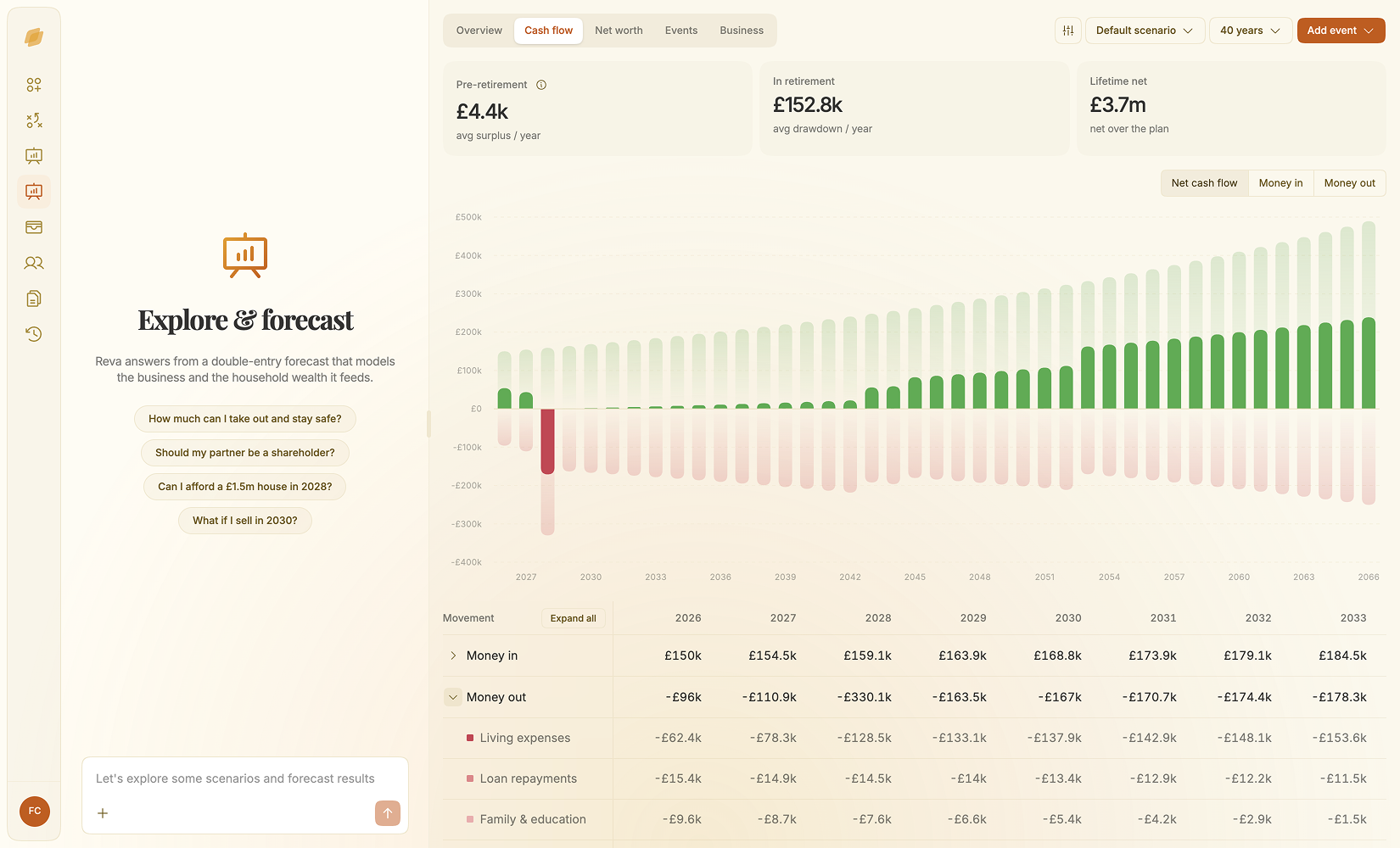
Real interface, illustrative data. The product is in private beta.
Context
Reva is building the personal CFO for business owners. An AI-native private banking experience that spans business and personal lives. Because every financial decision is interconnected.
I joined at pre-seed as Founding Designer, alongside the two founders.
After an initial £200k angel investment, we’re looking to raise £3m in the next few months, launching the first MVP in October, then iterating on early feedback from clients and partners.
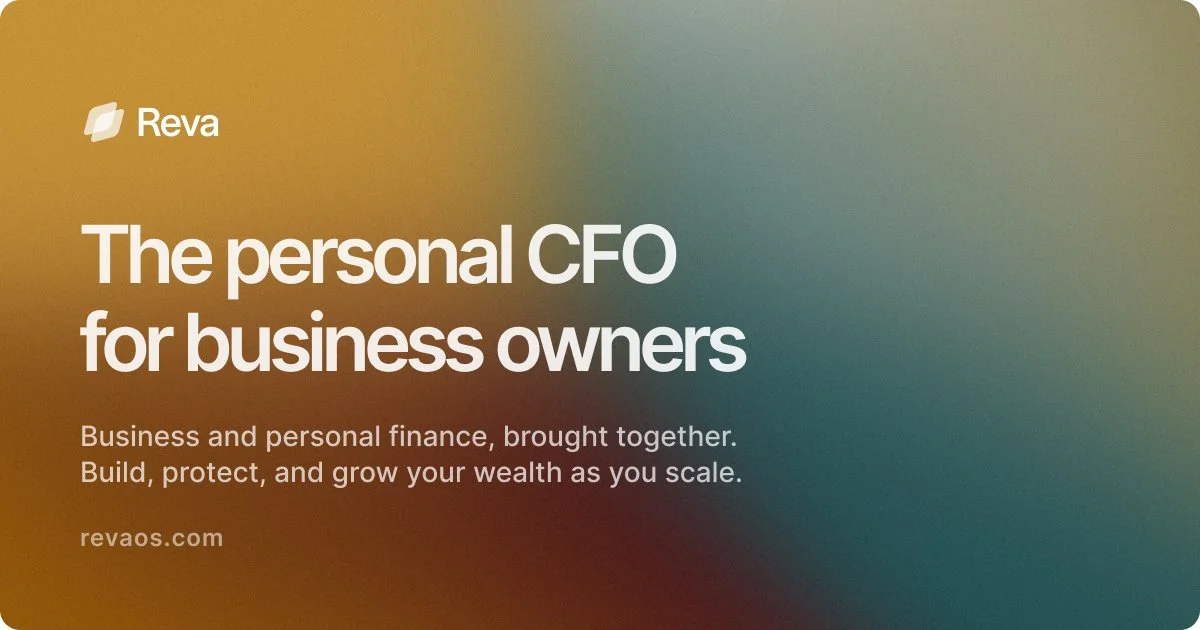
Learn more about Reva at https://revaos.com/
Challenge
When I joined in December 2025, there was no brand, no design system, no product. Just an idea and a 40-slide deck the founder used to raise the initial funds. A blank canvas brings excitement and responsibility in equal measure.
Earning trust with people's money. A product asking business owners to bring their whole financial life had to feel premium and secure. That goal has shaped every decision since day zero.
A design function of one. Me and the two co-founders. Every design decision, from brand strategy to component code, sat with one person.
Branded, never generic. The product couldn't feel like a template. A distinctive design language came first, then a design system built around it, so every touchpoint speaks Reva.
Designing for AI agents too. At Reva, agents write production code alongside the engineers. The design system had to work for machines as well as humans.
Startup pace, private bank standards. Everything clients, partners and investors would see, delivered at the speed of an early-stage raise, without looking like it.
Solution
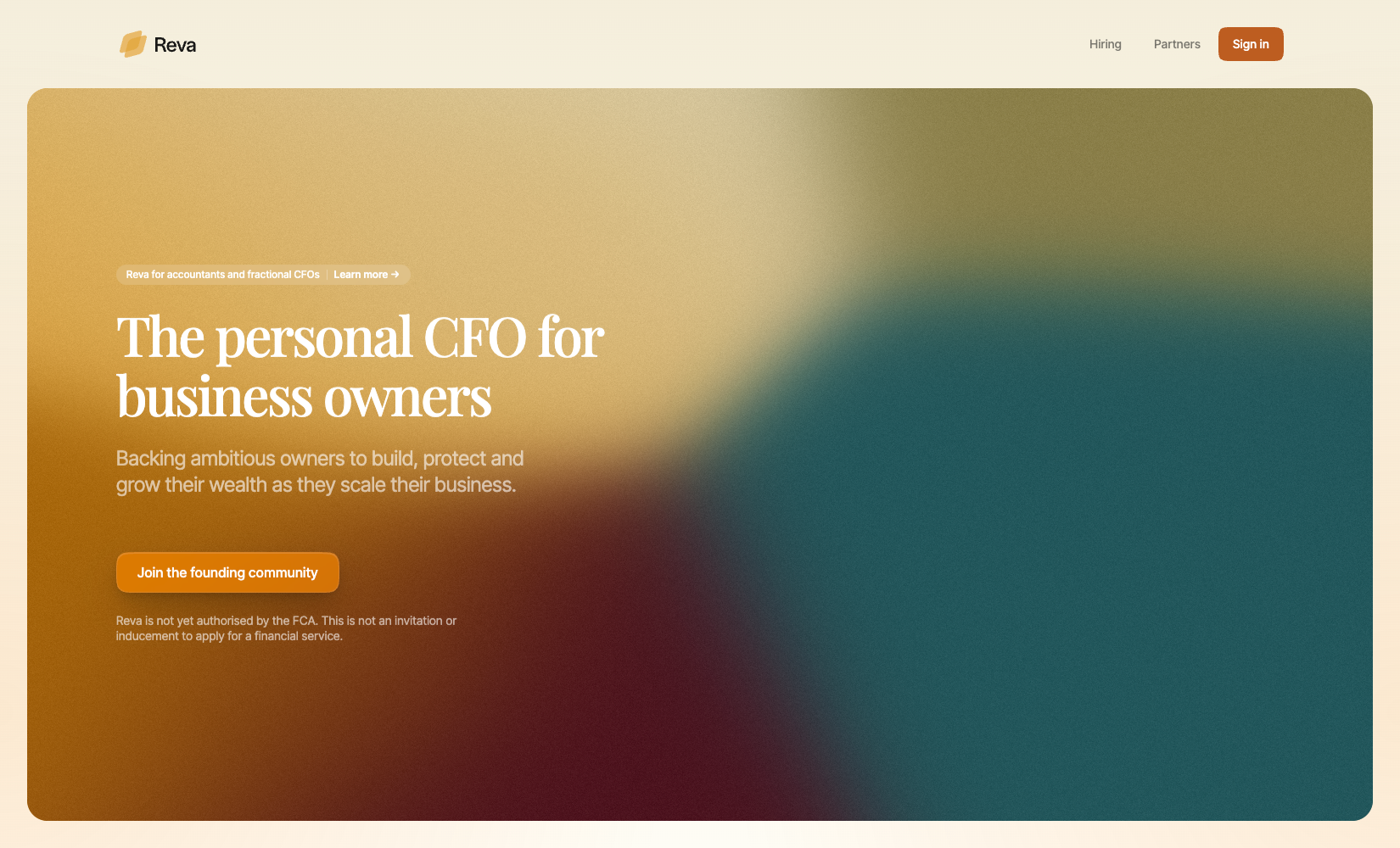
The work falls into three streams. The brand and its digital foundation. A platform-agnostic design system that AI coding agents can build with. And the product itself: a client portal and a mobile app. Each built on the one before.
1. Brand and digital foundation
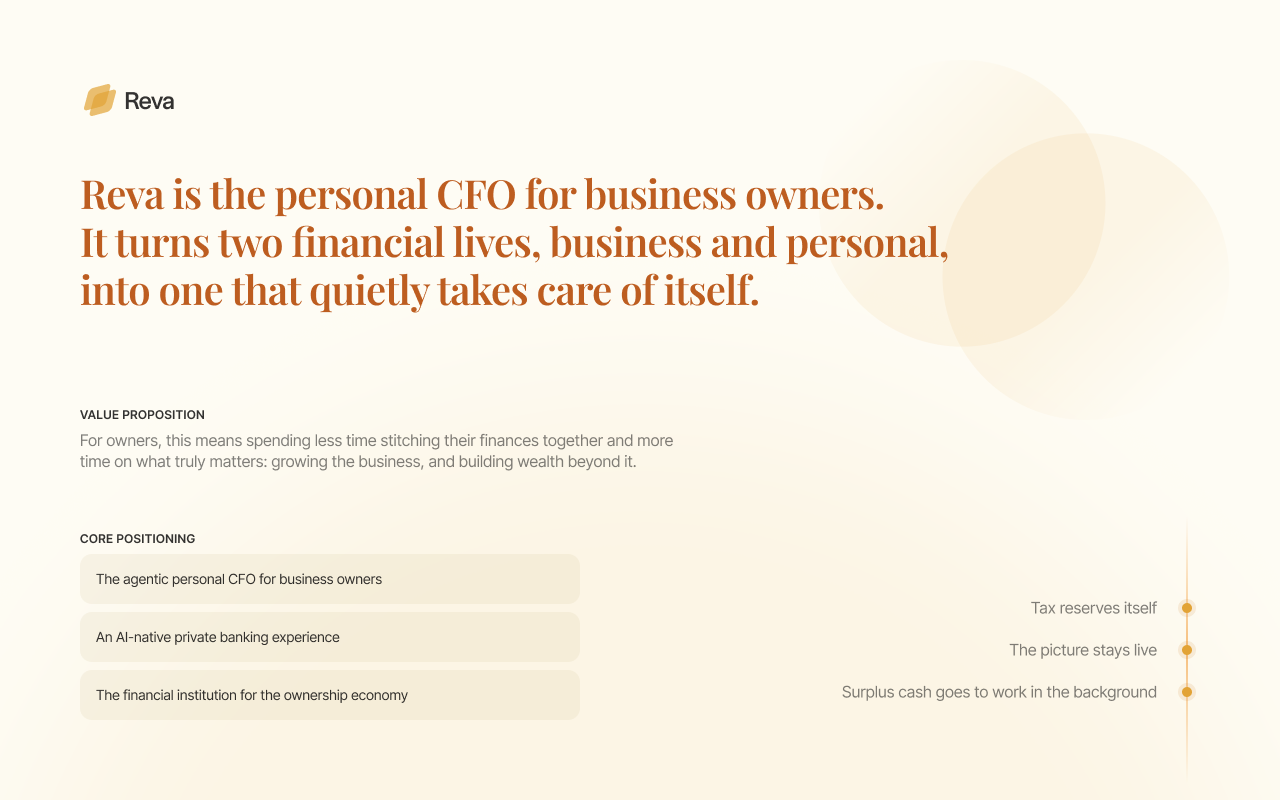
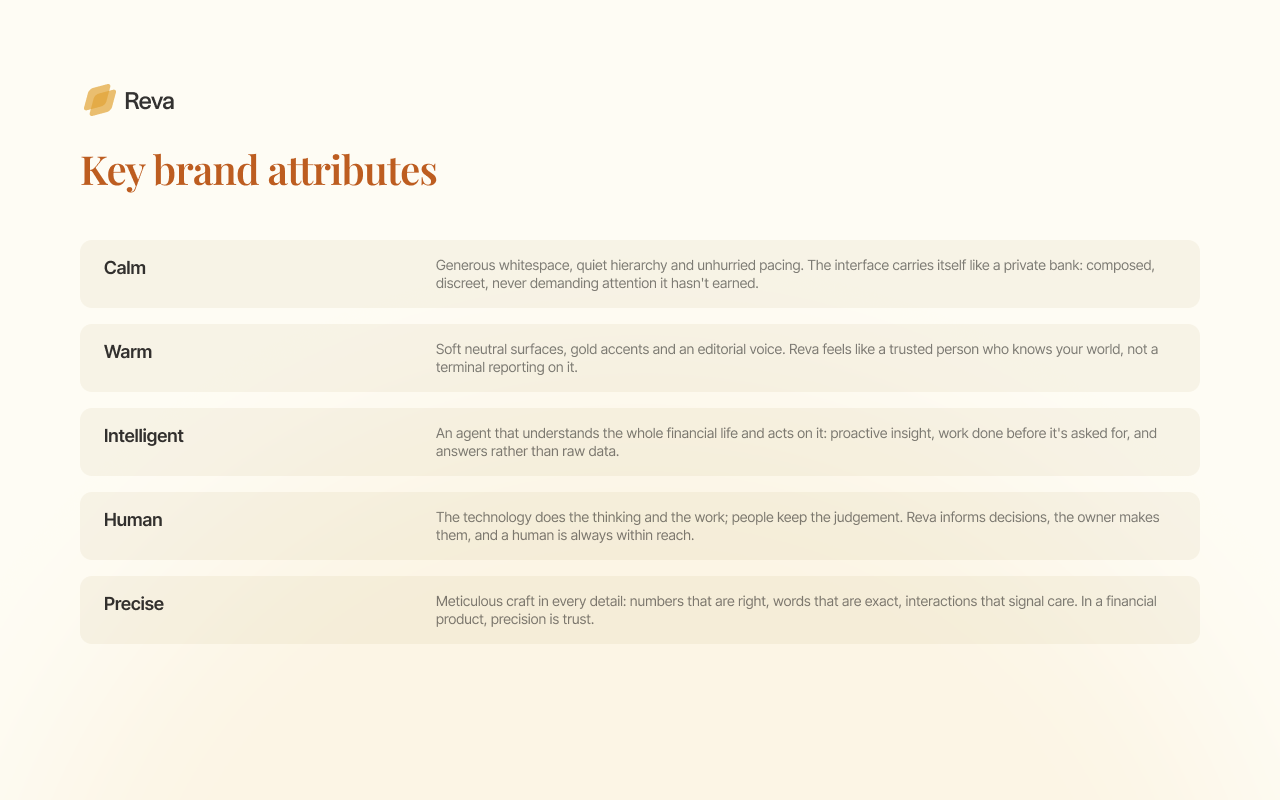
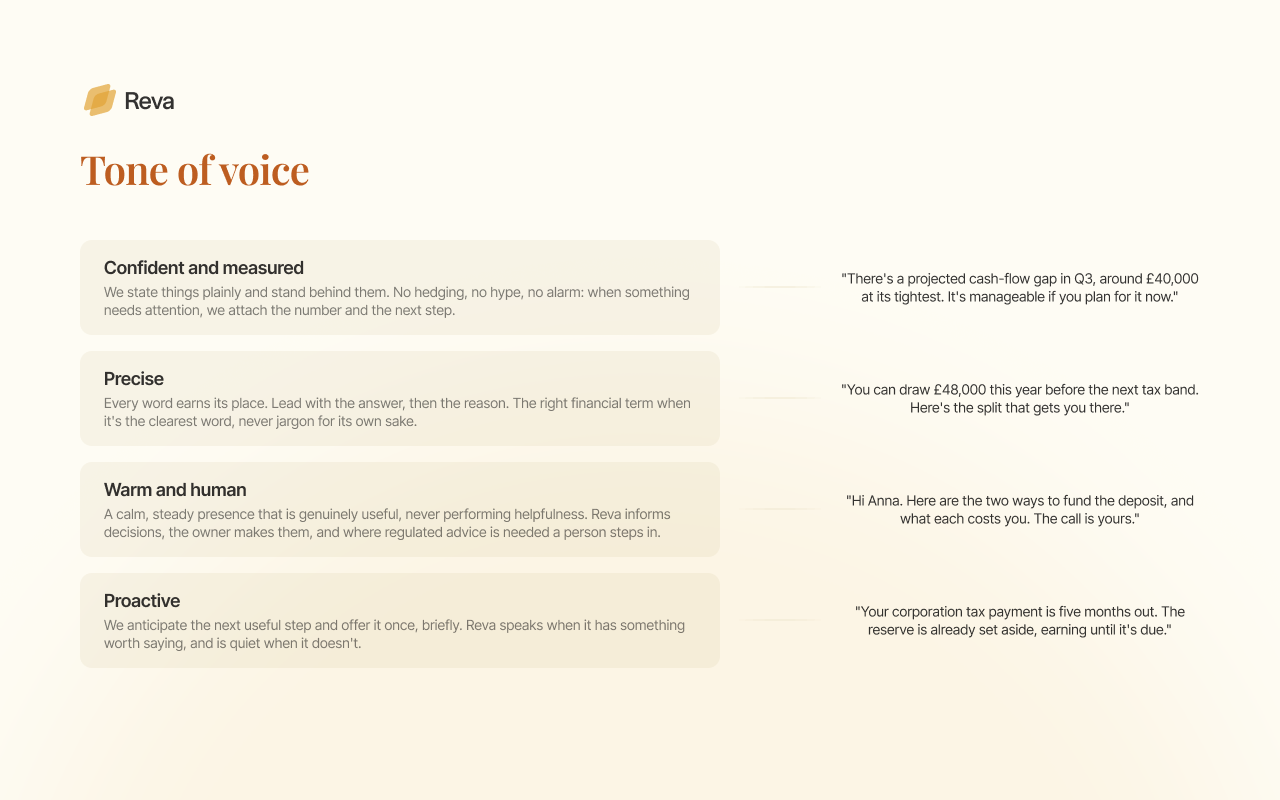
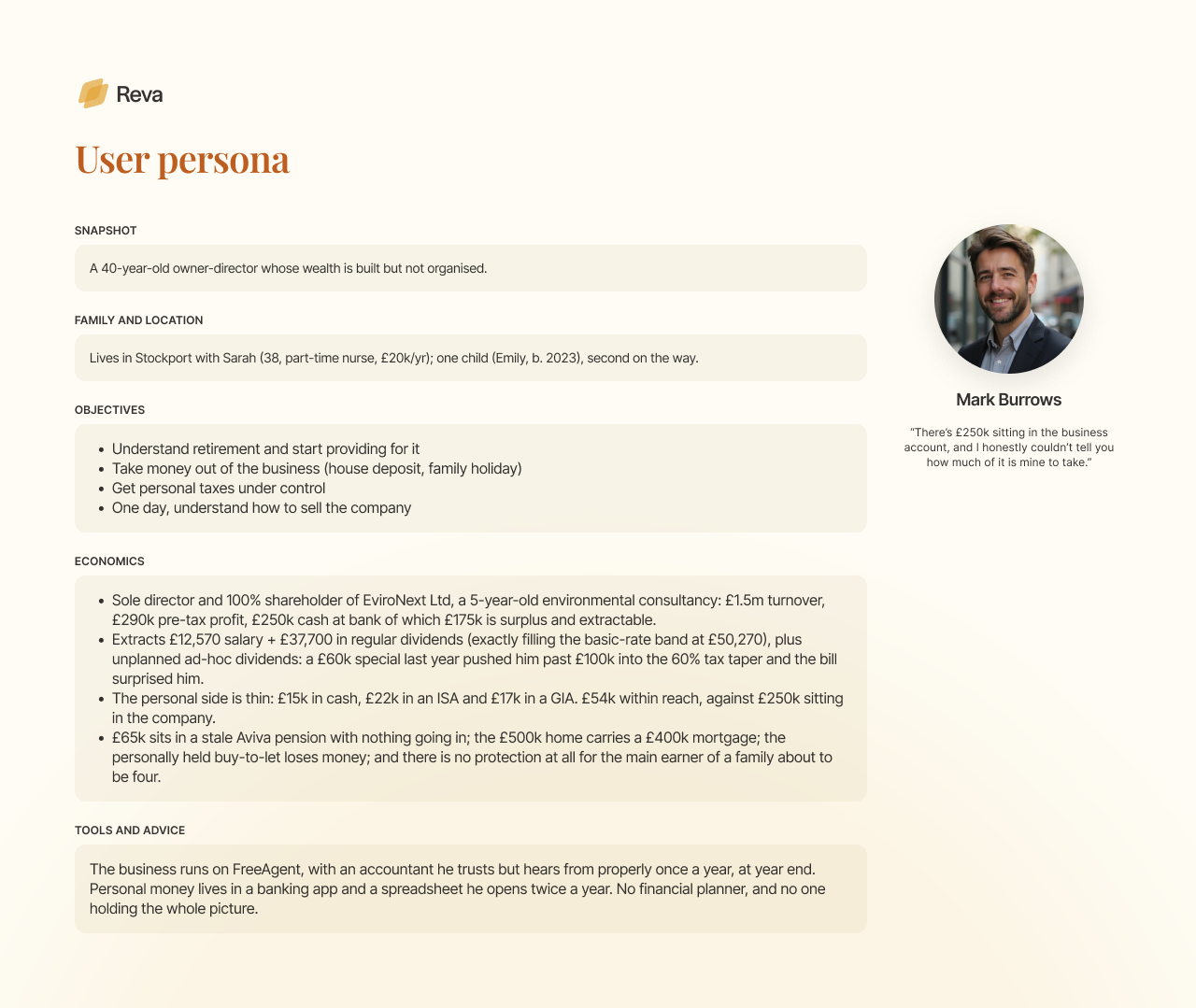
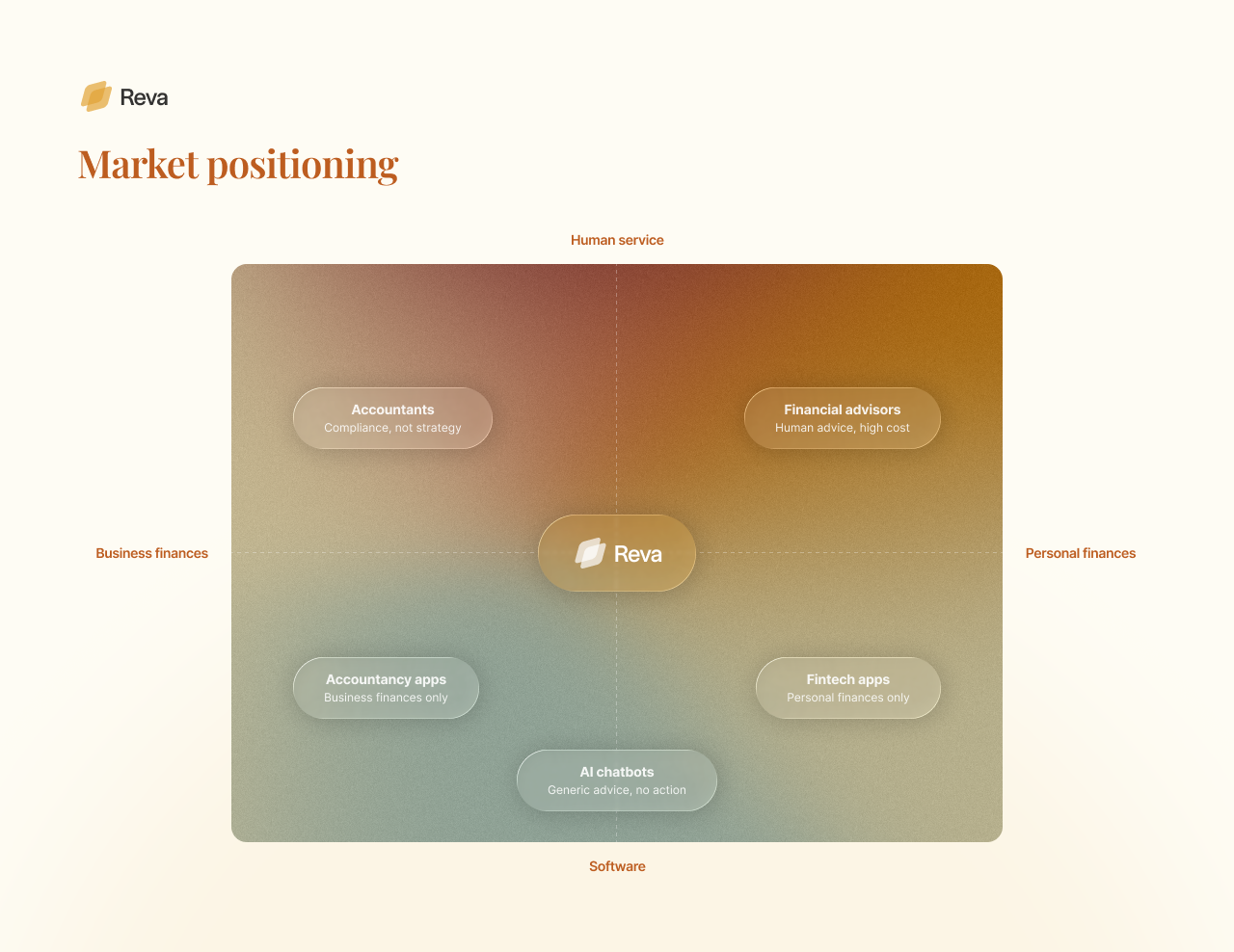
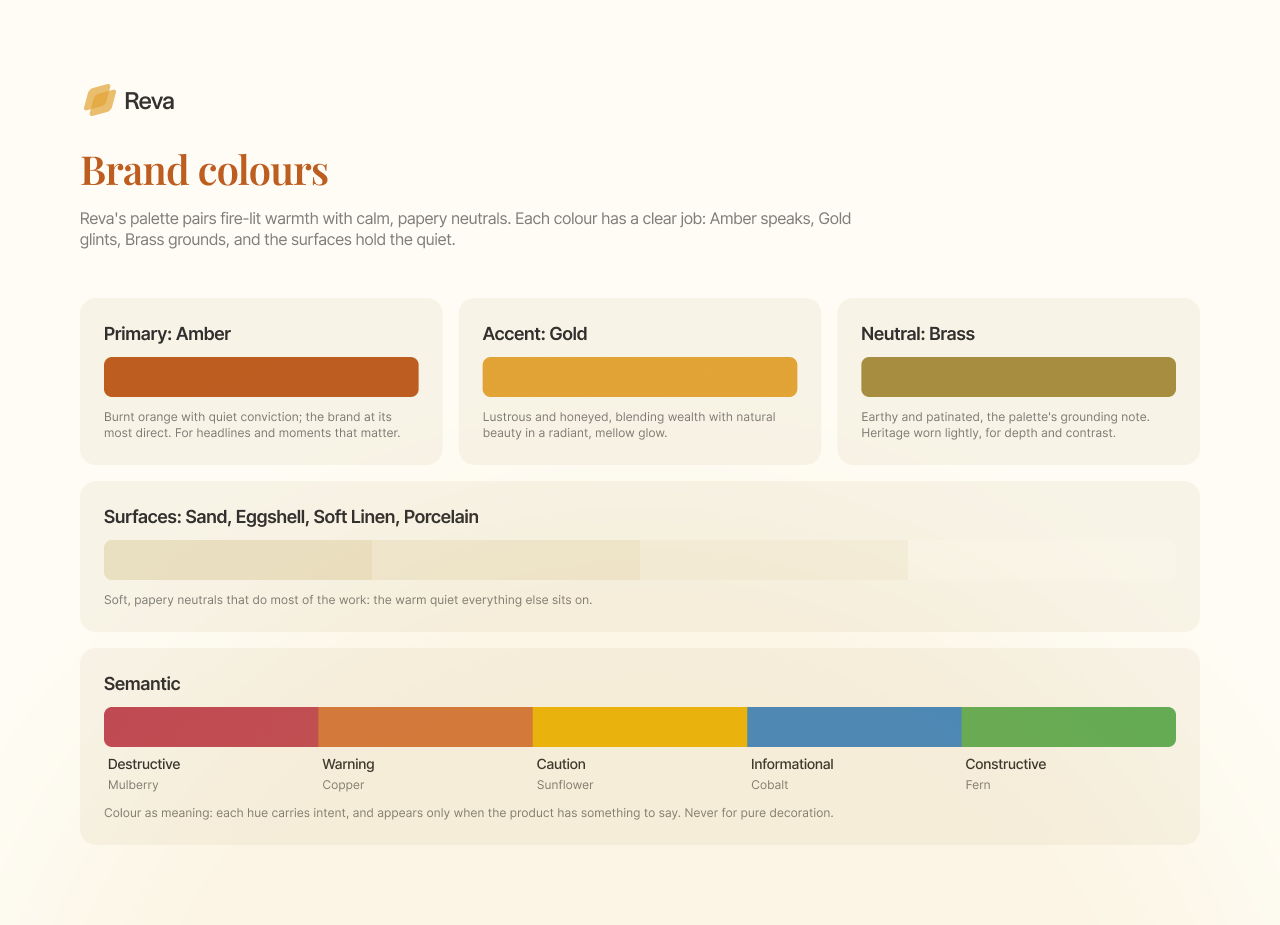
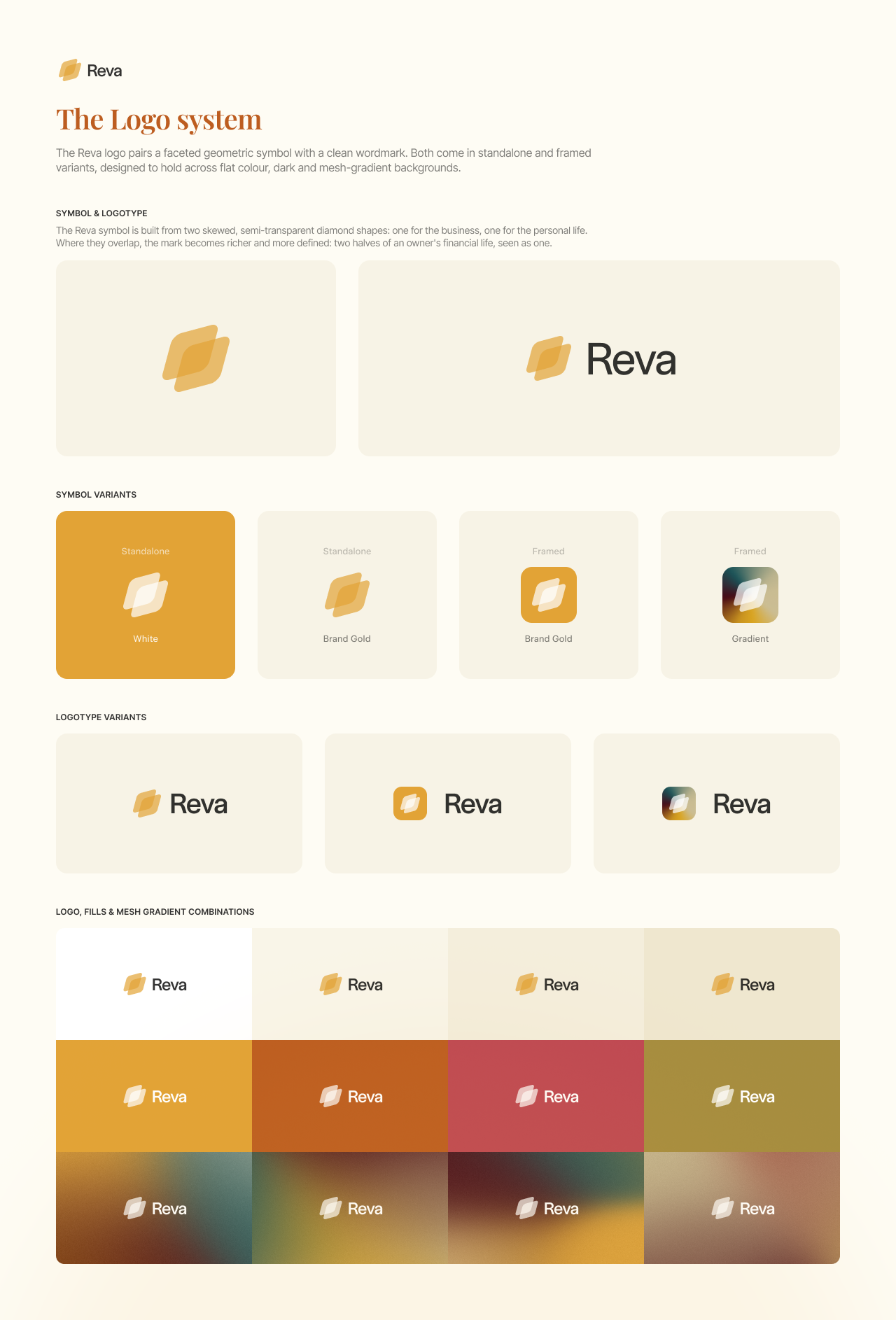
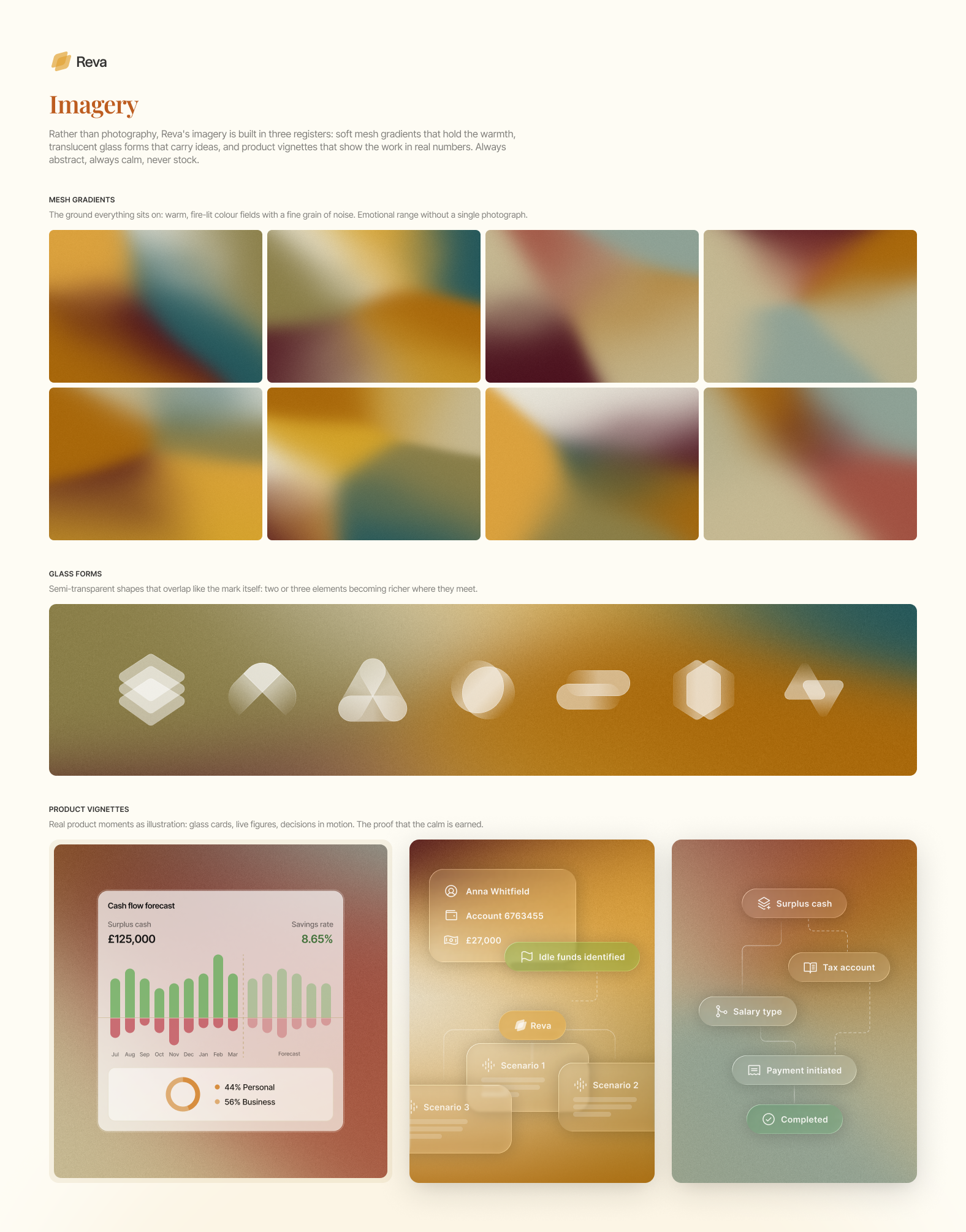
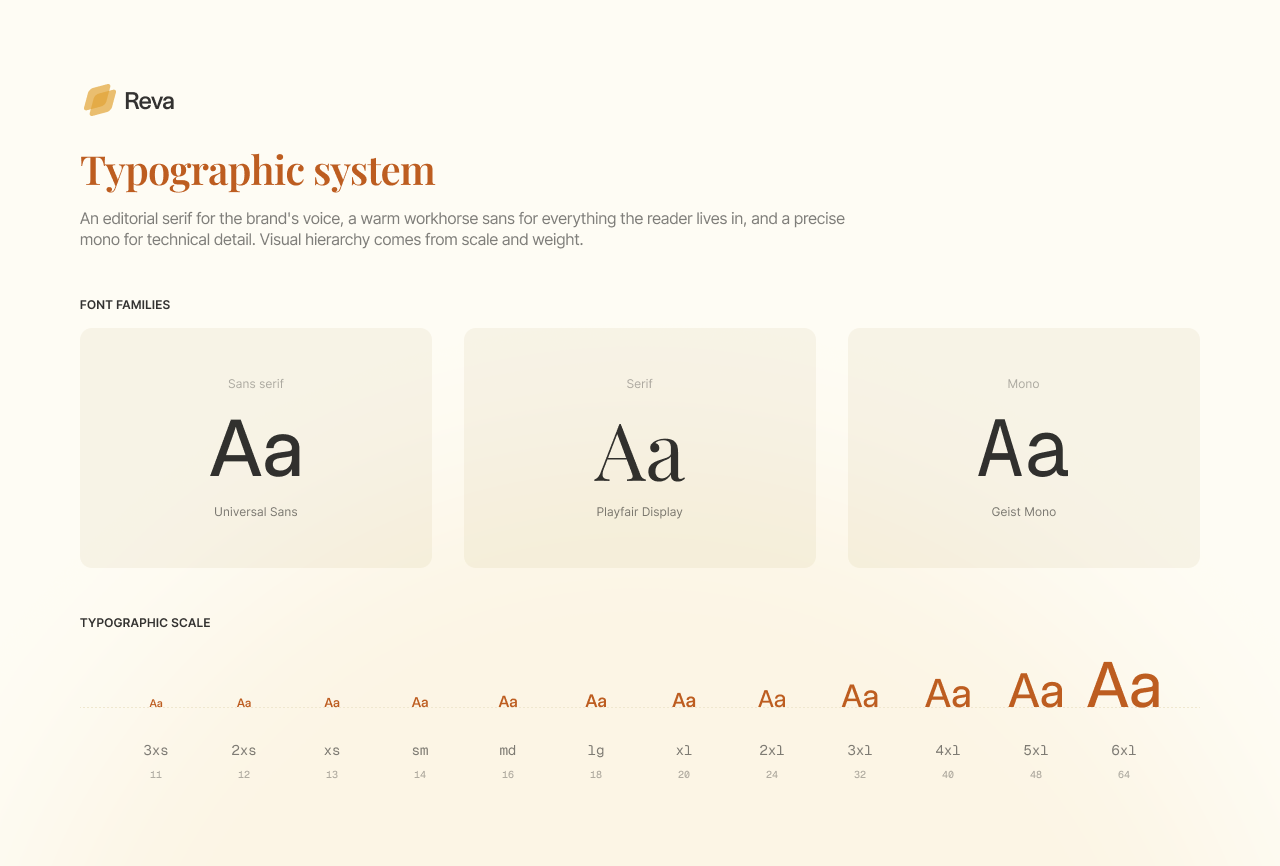
Foundations came first: who Reva serves, where it sits in the market, and the attributes and tone of voice that guide every word. Then the visual language: a palette balancing warmth with authority, a logo built from two overlapping forms, a typographic system stretching from editorial marketing to data-dense product, and custom imagery in place of photography, generated with a mesh gradient tool I built.
2. Design system and design token architecture
One designer, two platforms, and AI agents writing production code alongside the engineers. The design system had to serve them all, so it lives outside any single tool: design decisions stored as platform-agnostic tokens, documentation that machines read as well as humans, and components built the same way whoever writes the code.
Tokens as the source of truth. Design decisions live in JSON files, not in Figma. Token files in the DTCG format hold the raw primitives and a semantic layer that gives each value a meaning; light and dark colour modes are two separate palettes. A single build turns that source into CSS for the web, a native theme for mobile, typed tables for code, an email preset and Figma variables, synced in by a custom plugin. Figma is a consumer of the system, not the source.
I built a palette generator to create the colour primitives. It works in OKLCH, so every ramp is perceptually even: nineteen steps per hue (50-950), consistent across both colour modes.
Learn more about Reva design token system: https://docs.revaos.xyz/design-tokens
Two component libraries, one language. React on the web, React Native on mobile, one shared token vocabulary, so design intent survives the platform boundary. The libraries are siblings, not mirrors: web is built upon shadcn/ui and Tailwind, while mobile is 22 hand-built UI primitives, only what mobile needs.
The whole system is documented in public: explore it at docs.revaos.xyz.
AI skills for design engineering. The system's rules, written the way I'd brief a new hire. Skills teach agents the conventions, an MCP server answers component questions, and an automated audit blocks off-brand code. Human-in-the-loop by design.
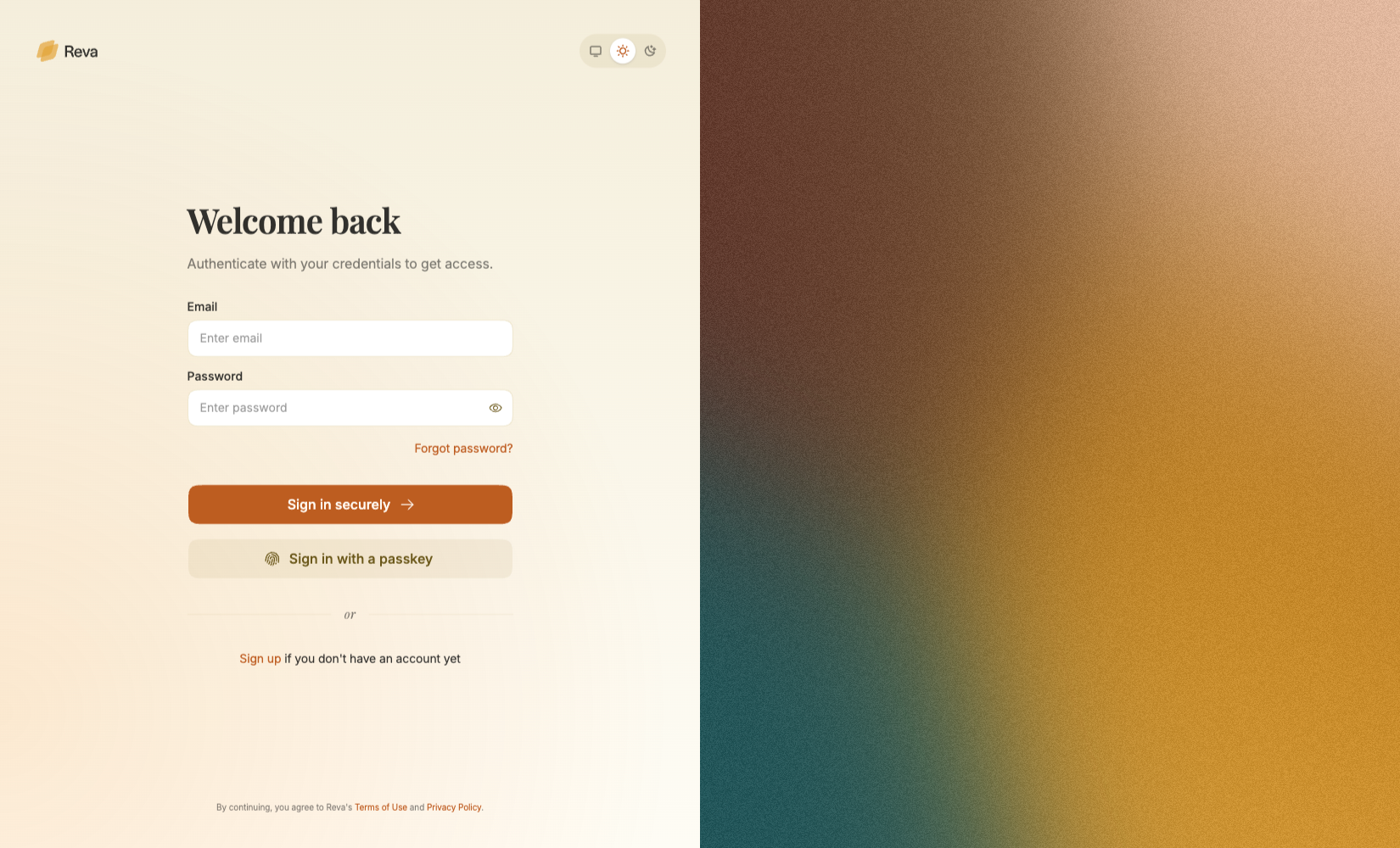
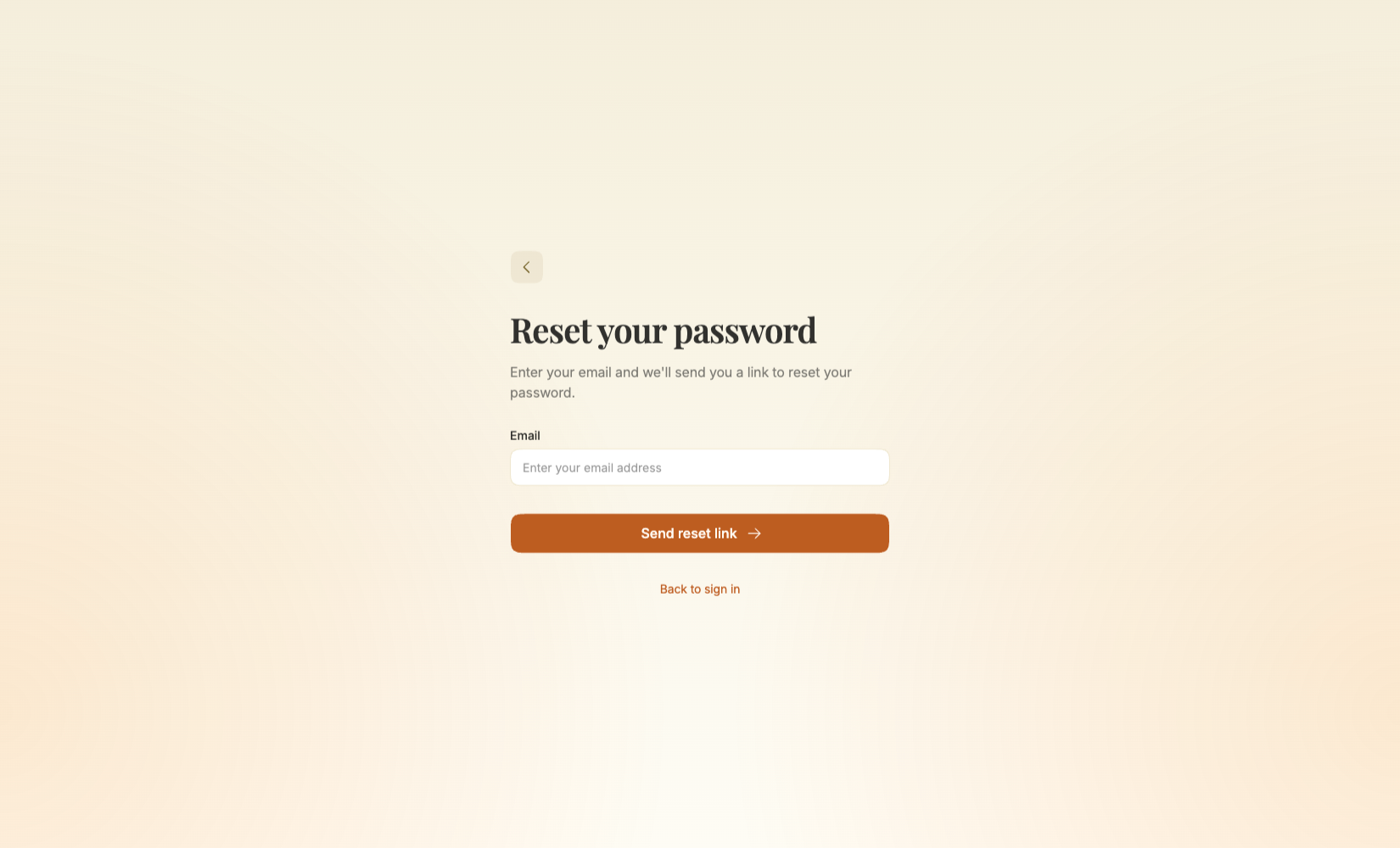
Email, systematised. Transactional email built with React Email and Resend, on the same design tokens as the product. The build flattens colours into email-safe values for older clients. One system, from marketing site to password reset.
3. Product Design
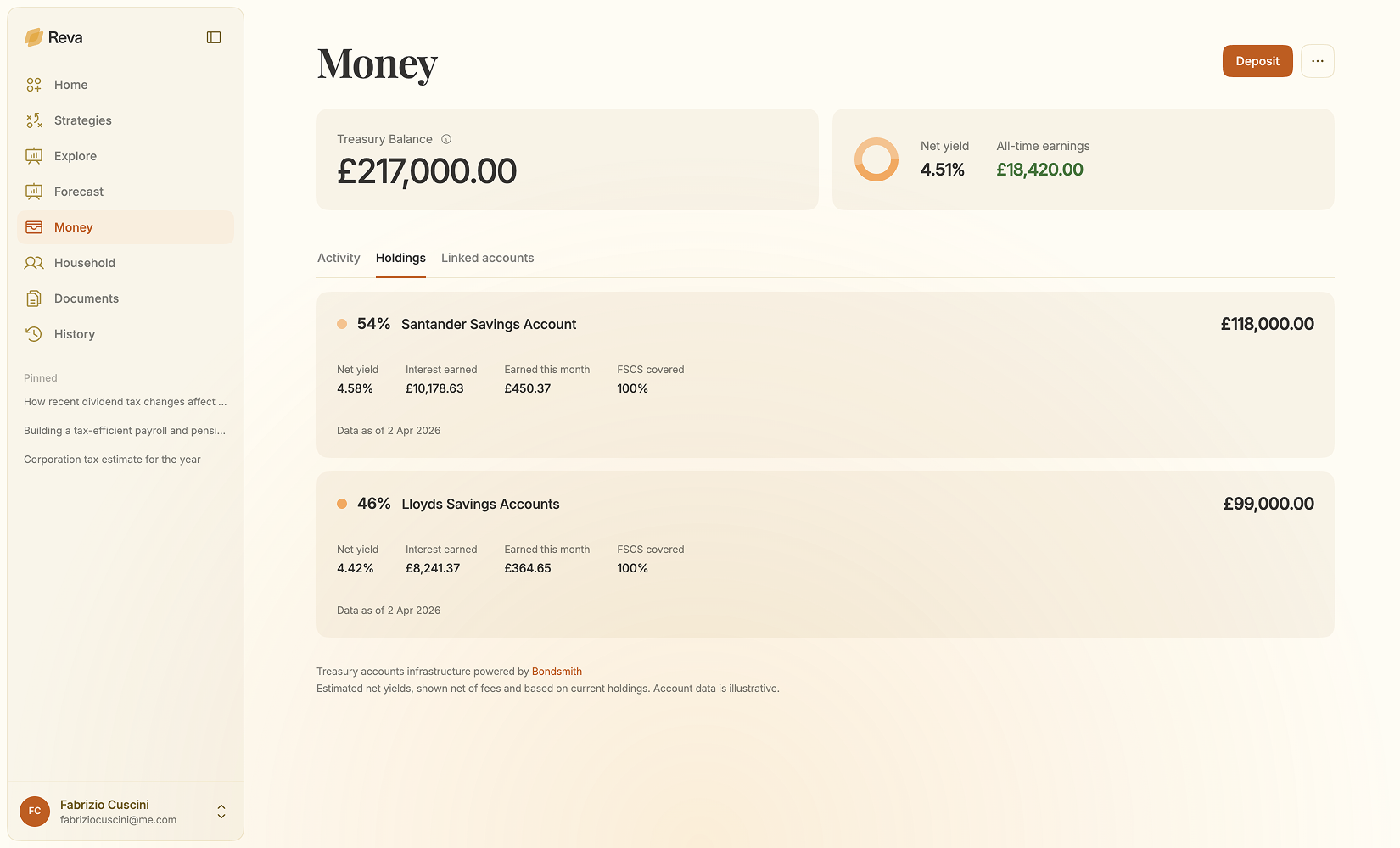
The product is in private beta and moving fast, so this chapter shows work in motion.
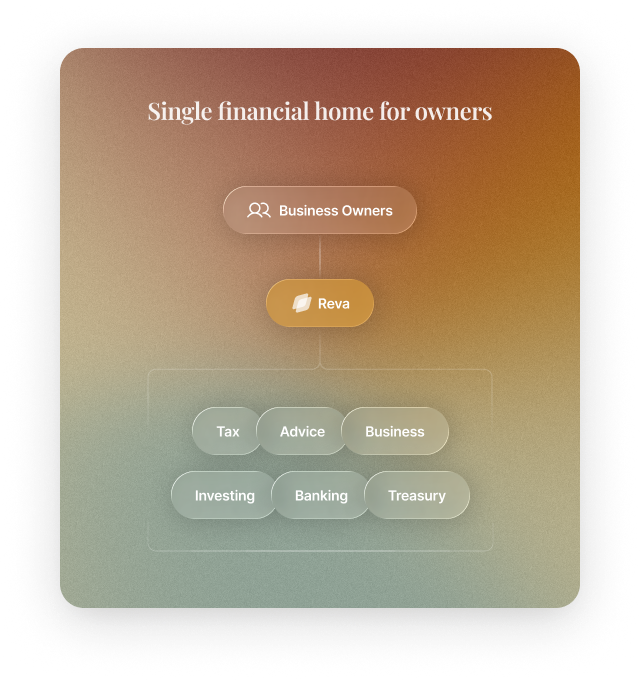
Reva is a private bank, delivering AI-enabled services to owners. The product we’re designing is focused around three pillars:
Understand the owner: Business, personal, goals and tax become one connected financial picture.
Advise: AI agents and financial professionals can make sense of an owner’s financial snapshot and come up with strategies to achieve set goals.
Execute: Co-ordinate those decisions through workflows and tailored financial products to deliver outcomes.
User research
Hundreds of hours with business owners, accountants and financial advisers, synthesised into five personas and four product playbooks. One insight anchors everything: owners rarely know what is genuinely safe to take out of the business. Once they have that number, everything else flows from it.
Mark Burrows, our design persona, is a 40-year-old owner-director: £250k sitting in the company, a thin personal side, and no one holding the whole picture. Every flow is designed and tested against his life.
The agent is the interface
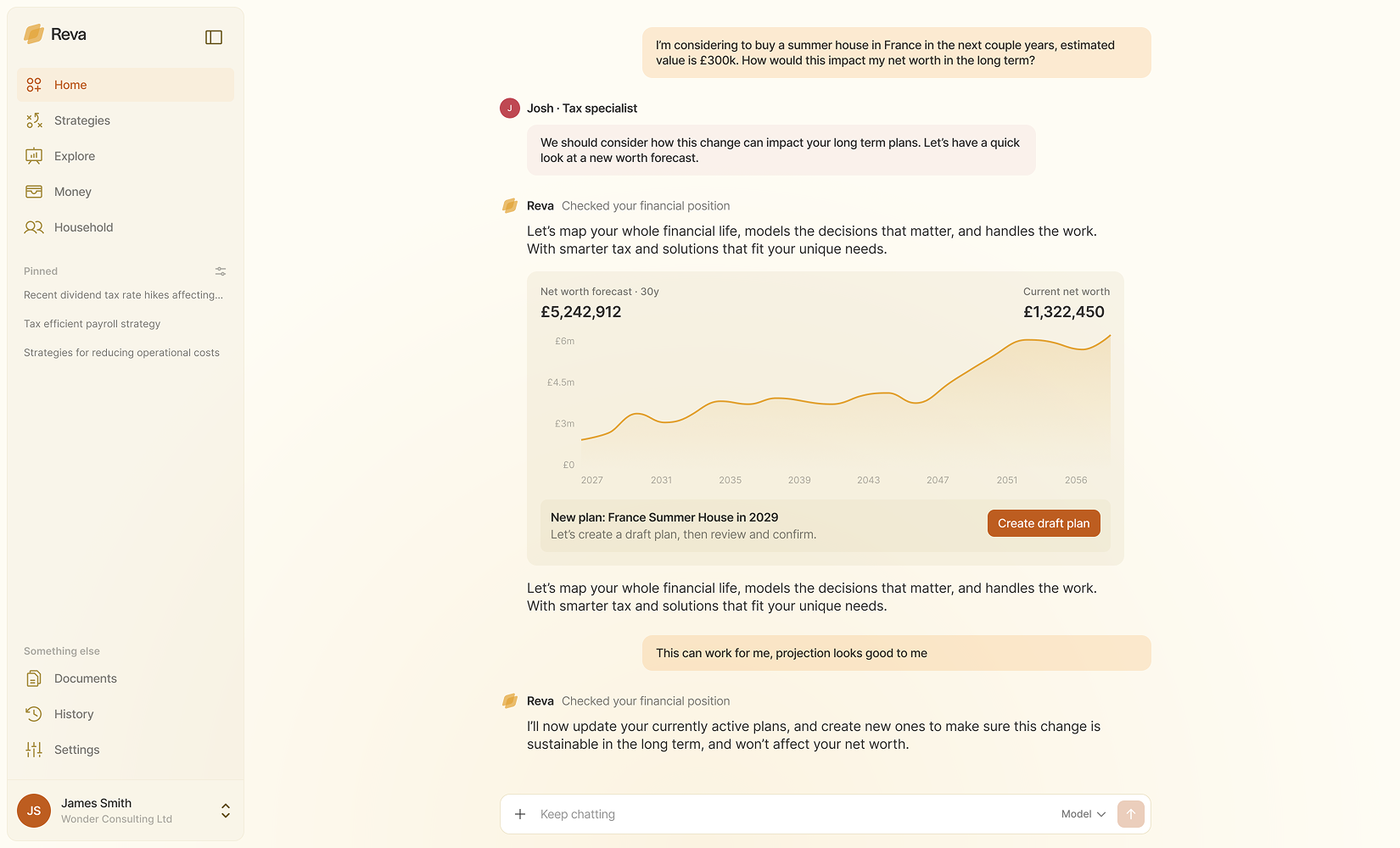
The Reva agent is the owner’s personal CFO. So we wanted the client portal to be conversation-first. Owners ask in plain English, the agent gathers the figures, models the options and answers in a thread, with the thinking clearly shown. Regulated humans step in where a decision needs judgement or advice.
Confidence, not optimisation
Owners rarely want the mathematically optimal answer. They want the confidence to make a big financial decision and know it's safe. So every screen leads with one clear number and the next step, not a dashboard of everything. The detail is there when they want it, never in the way.
Outcome and reflections
What shipped, and what held. In December we set off to build an intelligent infrastructure for modern financial advisers. Then, in June, Reva pivoted. The adviser portal, the client app, auth app and core backend were wiped and rebuilt from scratch. The brand and design system carried straight over, which is exactly what they were built to do. That split is the clearest proof the system-first approach paid off:
Held through the pivot: the brand and the website (its design and build held; the copy was rewritten end to end for the new positioning), the investor materials now carrying the pre-seed raise, the token pipeline, two component libraries, the public docs site, and the email system.
Rebuilt after it: the client portal, the auth app, and the first beta product flows, all on the same foundations.
What it enabled. The point of the system was leverage:
AI coding agents ship on-brand, token-compliant production UI, so a team of three moves like a bigger one.
Anyone at Reva can produce on-brand imagery, copy and interfaces without a designer in the loop.
A brand and set of materials strong enough to carry a live pre-seed raise and open partner conversations.
Some numbers behind the work:
Website live in a week, designed and built solo. After the June pivot, rebuilt end to end with new copy and visuals in three days.
Over 1,000 design tokens, powering 112 web components and 22 mobile primitives across two platforms.
A Founding Community of 10 business owners now shaping the MVP as early adopters, with a partner network of accountants, tax specialists and regulated advisers taking shape alongside it.
What I took from it. Founding design here meant building the design infrastructure the product runs on: machine-readable, AI-ready, and built to scale. With one designer and machines as collaborators, the highest-leverage work was rarely a screen; it was the tokens, rules and skills that let a tiny team stay on-brand at speed, and hold their nerve through a pivot. That is the version of design I want to keep doing: setting the conditions for good work, not just doing the work.
Technologies & methods
Brand design: Figma Design, Figma Slides, FigJam, Mobbin.
Design token system: Style Dictionary, Figma, chromajs, custom AI skills.
Web Component Library: React, TypeScript, Vite, Tailwind, shadcn.
Mobile Component Library: React Native, TypeScript, NativeWind.
Project Management and Documentation: Linear, Notion, Fumadocs.
Process: founding designer operating across brand, system and product, with human-in-the-loop AI-assisted workflows.