
Reva
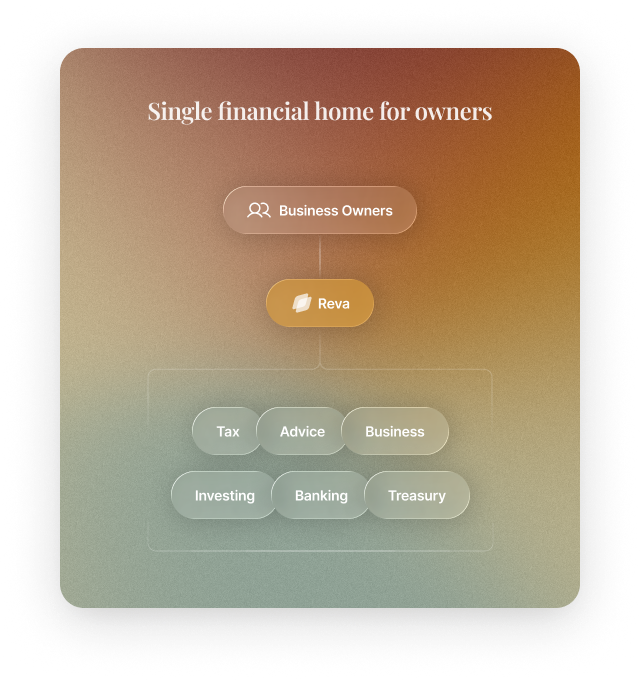
The personal CFO for business owners. An agentic private banking experience that spans across their business and personal lives. Because every financial decision is interconnected.
MY ROLE
Founding Designer covering brand, design system, product design and design engineering.
THE TEAM
Two founders (CEO and CTO), me as the entire design function.
TIMELINE
Dec 2025 to present, ongoing.
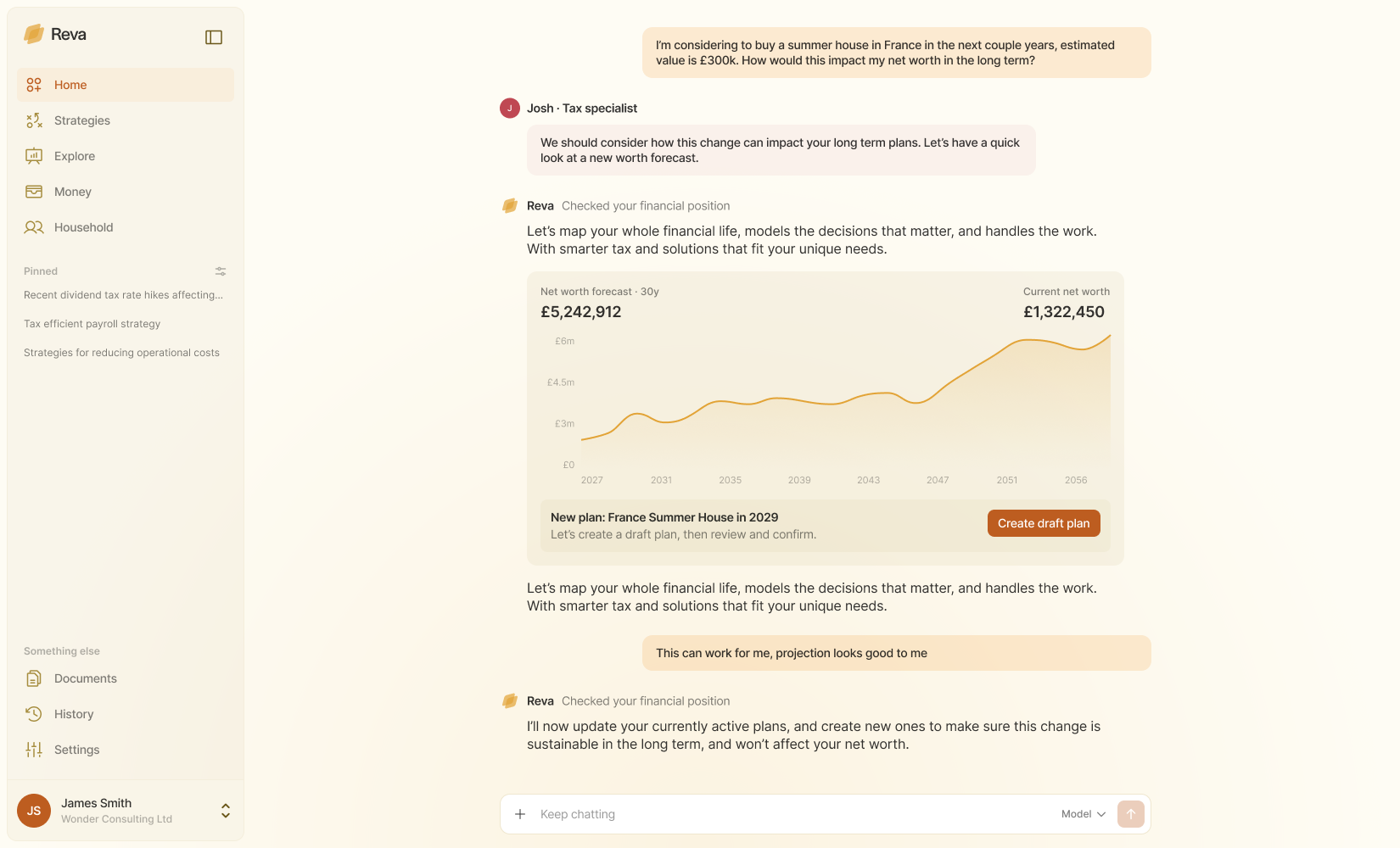
Real interface, illustrative data. The product is in private beta.
Reva is building the personal CFO for business owners. An AI-native private banking experience that spans business and personal lives. Because every financial decision is interconnected.
I joined at pre-seed as Founding Designer, alongside the two founders.
After an initial £200k angel investment, we’re looking to raise £3m in the next few months, launching the first MVP in October and start iterating on early feedback from clients and partners.
Learn more about reva at https://revaos.com/
Context
Challenge
When I joined in December 2025, there was no brand, no design system, no product. Just an idea and a 40-slide deck the founder used to raise the initial funds. A blank canvas brings excitement and responsibility in equal measure.
Earning trust with people's money. A product asking business owners to bring their whole financial life had to feel premium and secure. That goal has shaped every decision since day zero.
A design function of one. Me and the two co-founders. Every design decision, from brand strategy to component code, sat with one person.
Branded, never generic. The product couldn't feel like a template. A distinctive design language came first, then a design system built around it, so every touchpoint speaks Reva.
Designing for AI agents too. At Reva, agents write production code alongside the engineers. The design system had to work for machines as well as humans.
Startup pace, private bank standards. Everything clients, partners and investors would see, delivered at the speed of an early-stage raise, without looking like it.
Solution
The work falls into three streams. The brand and its digital foundation. A platform-agnostic design system that AI coding agents can build with. And the product itself: a client portal and a mobile app. Each built on the one before.
1. Brand and digital foundation
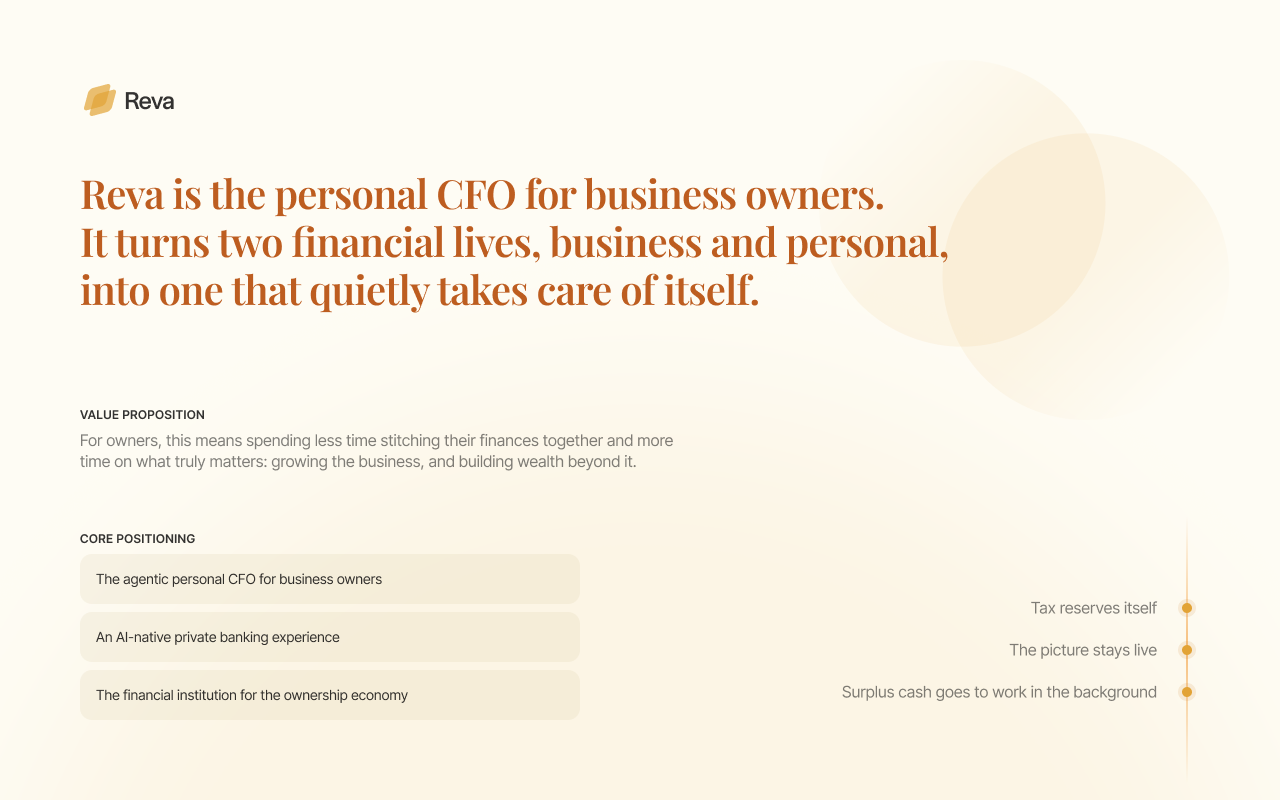
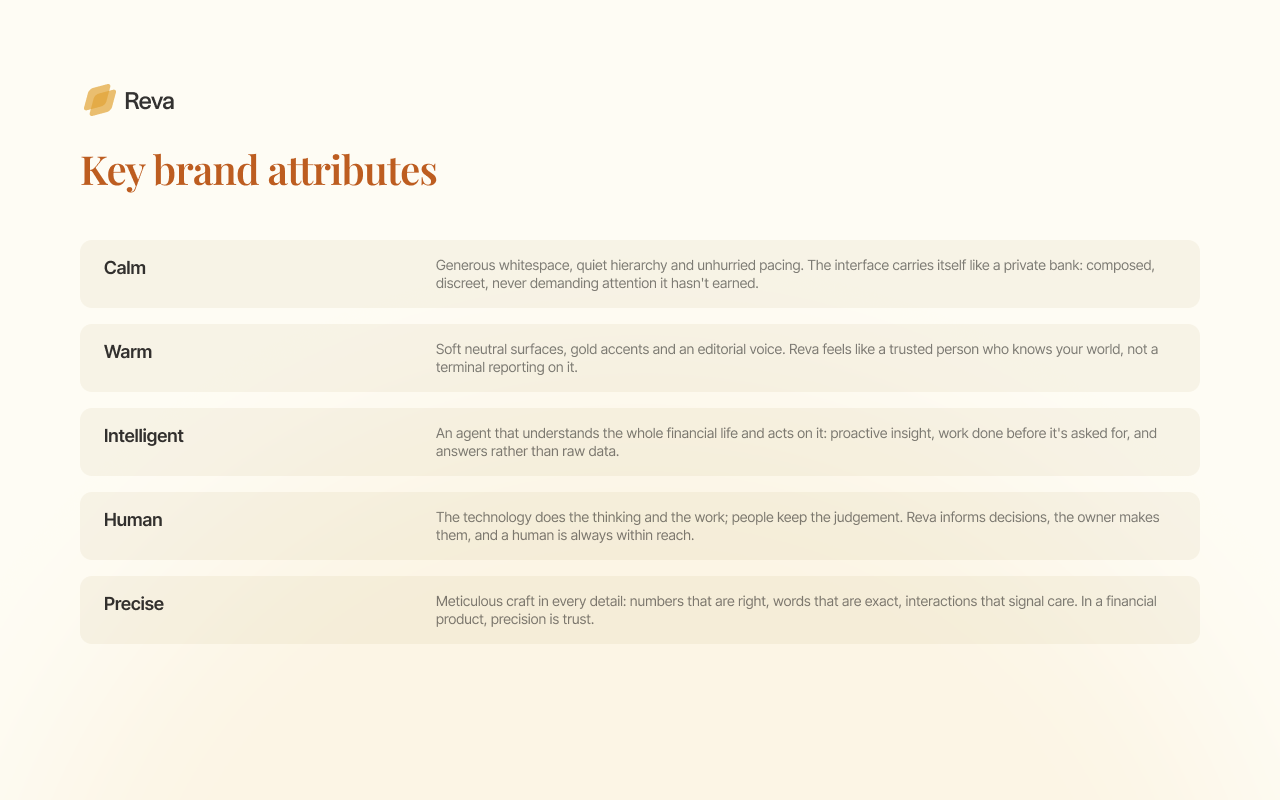
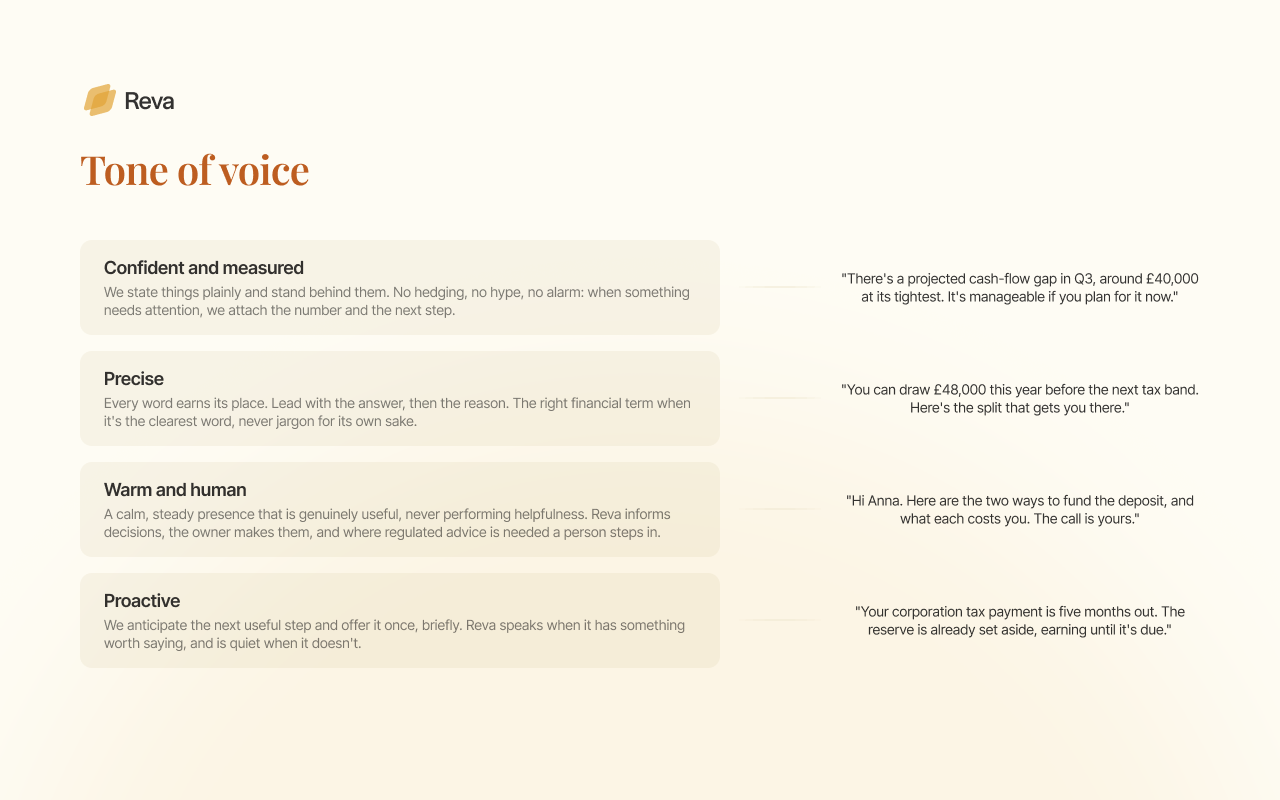
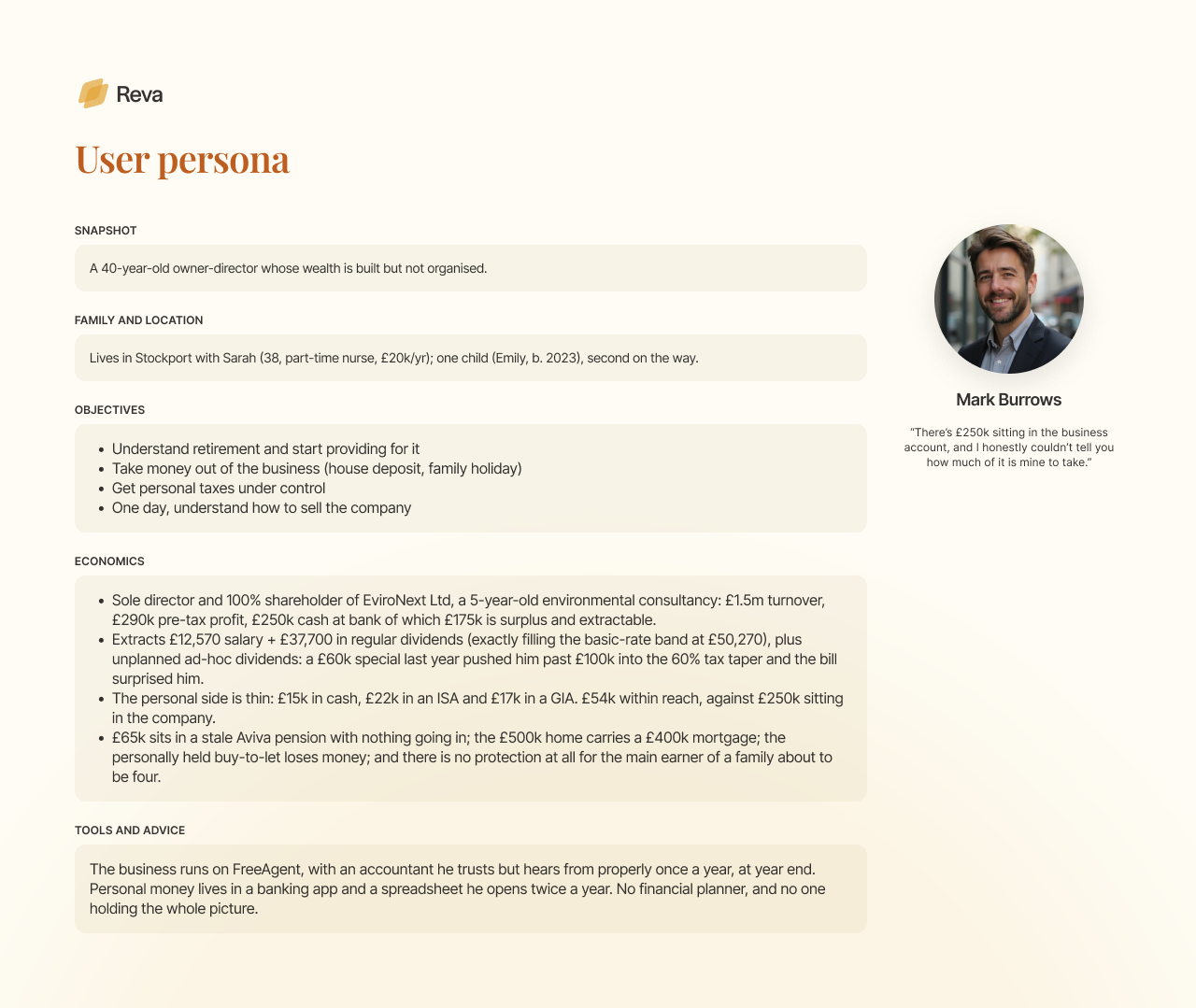
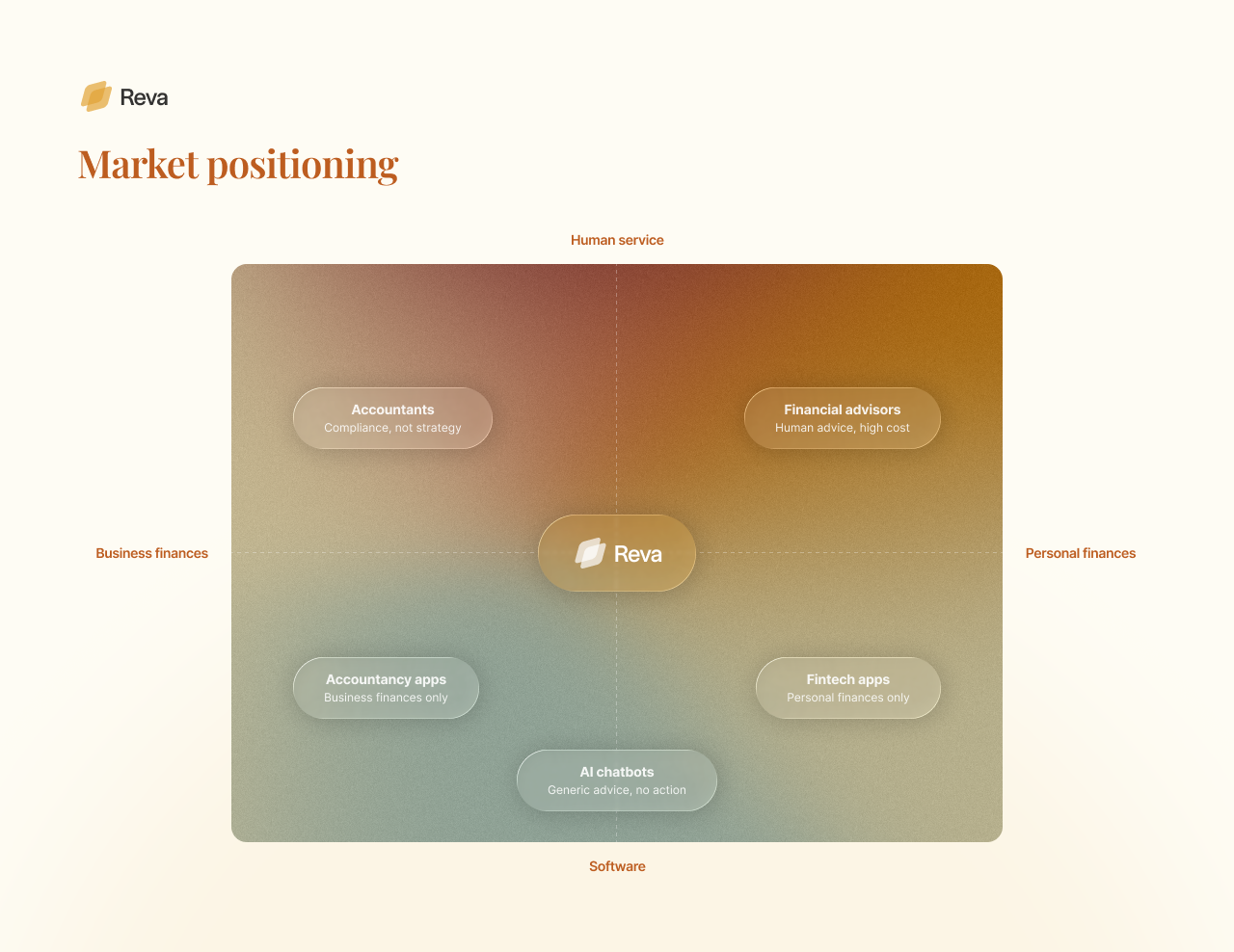
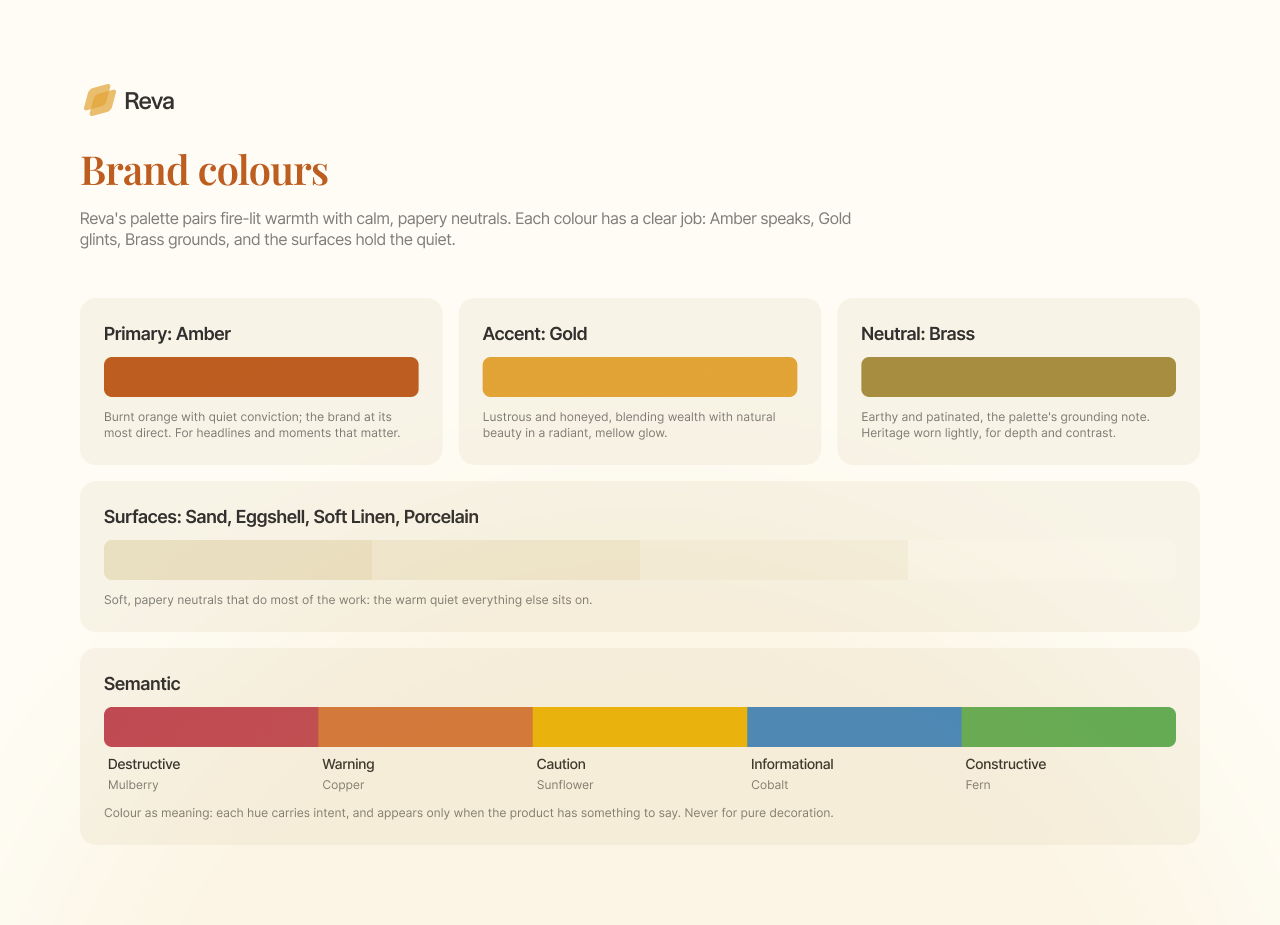
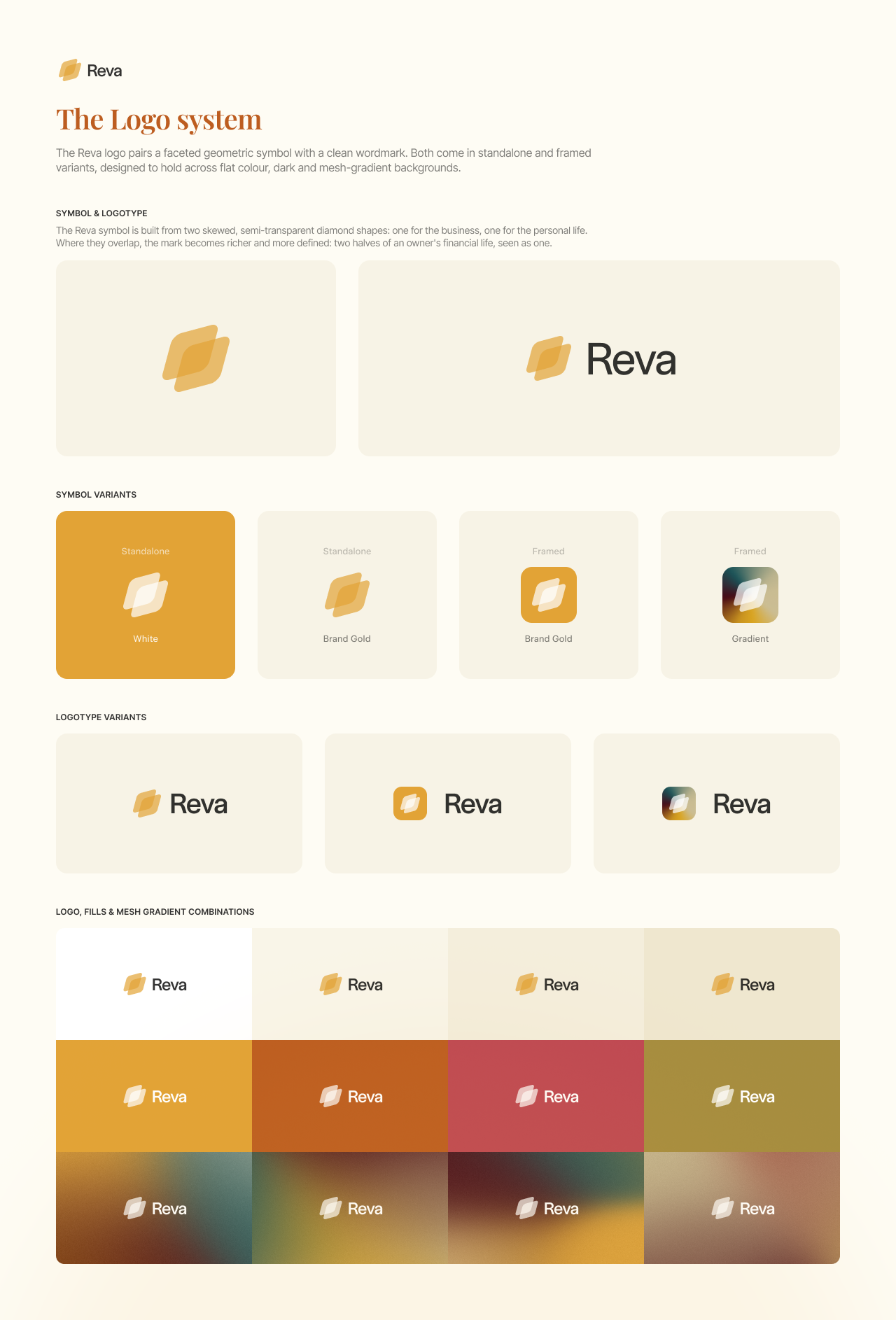
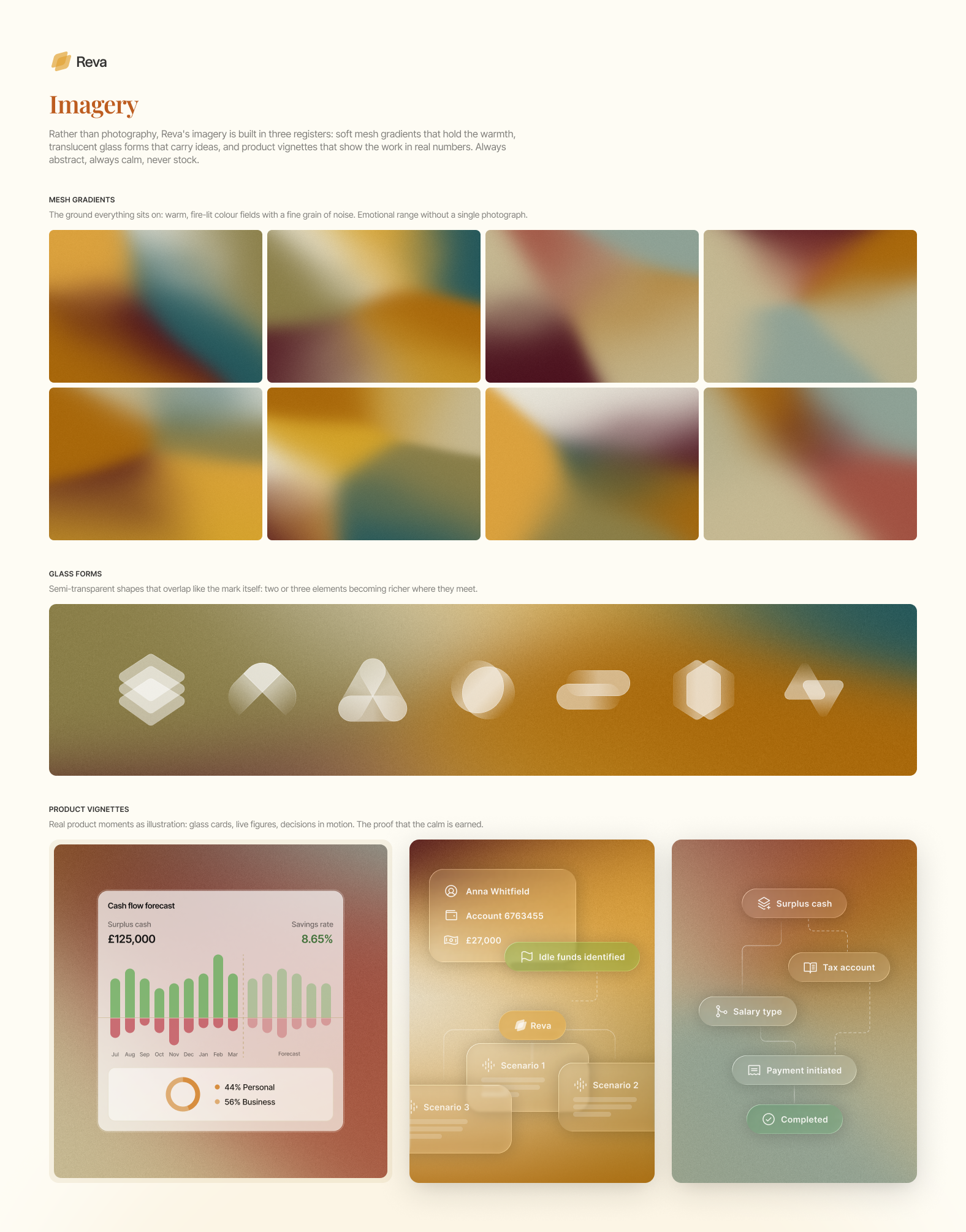
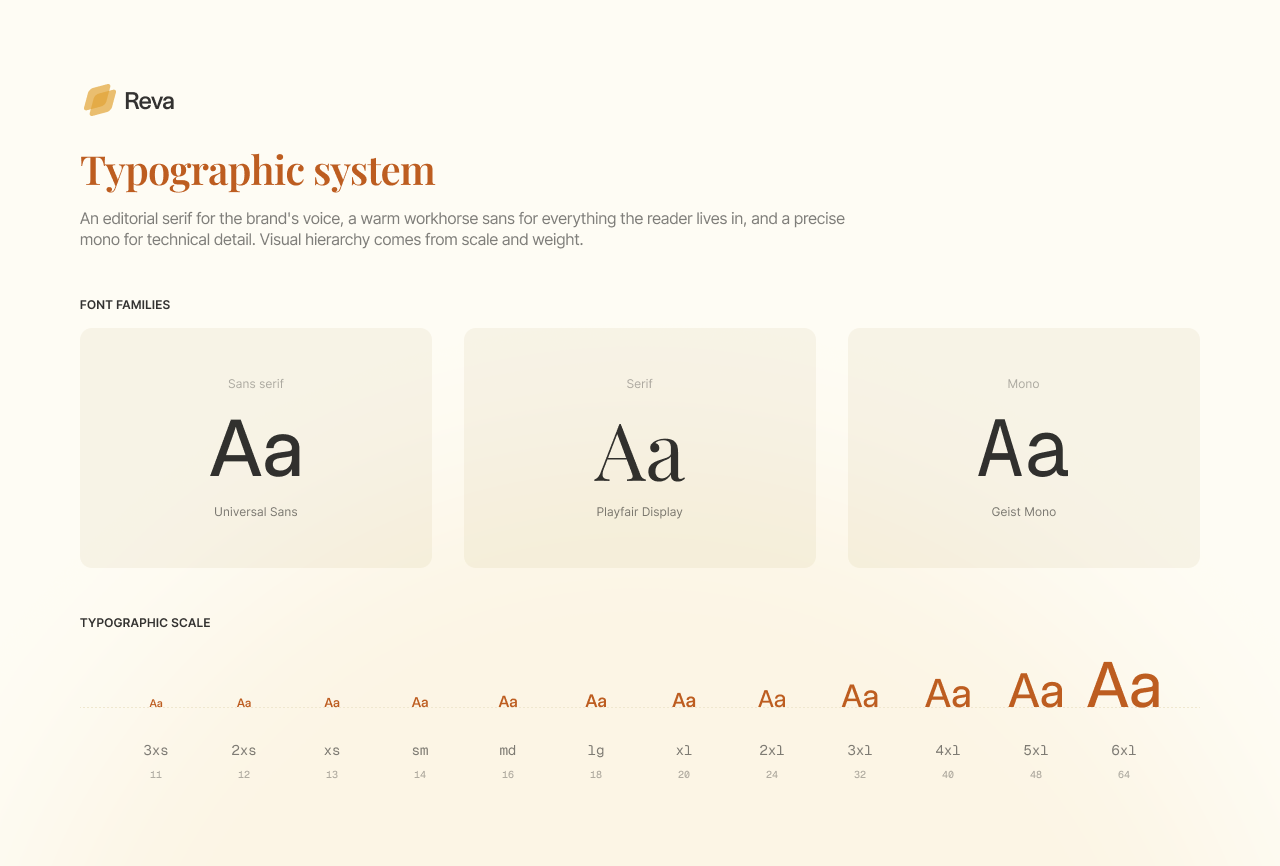
Foundations came first: who Reva serves, where it sits in the market, and the attributes and tone of voice that guide every word. Then the visual language: a palette balancing warmth with authority, a logo built from two overlapping forms, a typographic system stretching from editorial marketing to data-dense product, and custom imagery in place of photography, generated with a mesh gradient tool I built.
2. Design system and design token architecture
One designer, two platforms, and AI agents writing production code alongside the engineers. The design system had to serve them all, so it lives outside any single tool: design decisions stored as platform-agnostic tokens, documentation that machines read as well as humans, and components built the same way whoever writes the code.
Tokens as the source of truth. Design decisions live in JSON files, not in Figma. Token files in the DTCG format hold the raw primitives and a semantic layer that gives each value a meaning; light and dark colour modes are two separate palettes. A single build turns that source into CSS for the web, a native theme for mobile, typed tables for code, an email preset and Figma variables, synced in by a custom plugin. Figma is a consumer of the system, not the source.
I built a palette generator to create the colour primitives. It works in OKLCH, so every ramp is perceptually even: nineteen steps per hue (50-950), consistent across both colour modes.
Two component libraries, one language. React on the web, React Native on mobile, one shared token vocabulary, so design intent survives the platform boundary. The libraries are siblings, not mirrors: web is built upon shadcn/ui and Tailwind, while mobile is 22 hand-built UI primitives, only what mobile needs.
The whole system is documented in public: explore it at docs.revaos.xyz.
AI skills for design engineering. The system's rules, written the way I'd brief a new hire. Skills teach agents the conventions, an MCP server answers component questions, and an automated audit blocks off-brand code. Human-in-the-loop by design.
Email, systematised. Transactional email built with React Email and Resend, on the same design tokens as the product. The build flattens colours into email-safe values for older clients. One system, from marketing site to password reset.
3. Product Design: Client portal and mobile app
TBD
Outcome and reflections
TBD
Technologies & methods
Brand design: Figma Design, Figma Slides, FigJam, Mobbin.
Design token system: Style Dictionary, Figma, chromajs, custom AI skills.
Web Component Library: React, TypeScript, Vite, Tailwind, shadcn.
Mobile Component Library: React Native, TypeScript, NativeWind.
Project Management and Documentation: Linear, Notion, Fumadocs.
Process: founding designer operating across brand, system and product, with human-in-the-loop AI-assisted workflows.